Situations
Fun Friday games for the office
The activity is rarely the problem. The slot, the setup and the person made to sing on their own are.
· 8 min read
Why most Fun Fridays fizzle by the third week
Every office that starts a Fun Friday goes through the same arc. The first week is a hit because it is new. By the third, the slot has drifted to half past four, half the team is "just finishing one thing", somebody is reading the rules off a slide, and the activity needs a volunteer to sing. The volunteer is always the same person, and everyone else watches them do it.
The causes are boring, which is good news, because boring causes are fixable. It takes too long to set up. The format makes the quietest people perform. And nobody knows when it ends, so the people with a train to catch quietly leave at the start rather than awkwardly in the middle.
Three rules survive contact with a real office. It starts in under two minutes, with no preparation by anyone. Nobody has to perform on their own unless they want to. And it has a visible end. Every game below passes all three, and every one runs in a browser tab or on a phone from a room code, which matters more than it sounds on a work laptop where you cannot install anything.
If you have fifteen minutes
Who Wrote It? was built for exactly this slot. A prompt goes up, something like "your very first job" or "the strangest interview question you have been asked", and everyone types an answer on their phone. Then the answers come up one at a time, with no names, and the room guesses whose each one is. The person who sold ice cream on a beach in Goa for a summer is never the one anybody picks.
It works at work for a reason that has nothing to do with being fun: everyone decides how much to share, writes it quietly, and the reveal does the talking. Nobody is put on the spot. The author guesses too, so they can point at someone else to throw the room off, and that bluff is shown at the reveal, which is usually the biggest laugh of the round. The At Work pack sticks to first jobs, desk lunches, coffee orders and the tab you always have open, and keeps well away from salary, health, politics and relationships.
If the team is tired, Emoji Decode needs no explanation at all: a string of emoji, four choices, guess the film or the saying. Each puzzle is twenty seconds, and it survives people drifting in late. Would You Rather with its office pack ("four ten-hour days or five six-hour days?") is the other safe opener. The vote takes five seconds; the argument afterwards is the game.
If you have half an hour
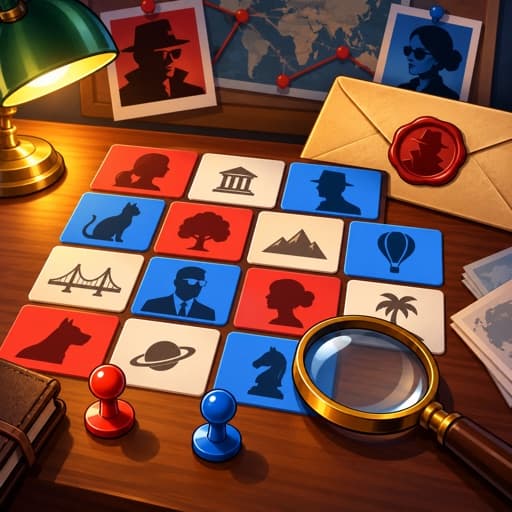
Codenames is the best thirty minutes most teams will spend together. Two teams, a grid of twenty-five words, and a spymaster on each side giving one-word clues that point at several of their words at once. It rewards knowing how your colleagues think, and a team that has worked together for years will discover they do not, which is the fun of it. It needs four to ten people, and the spymasters see the key on their own phones, so nobody has to turn a laptop away from the room.
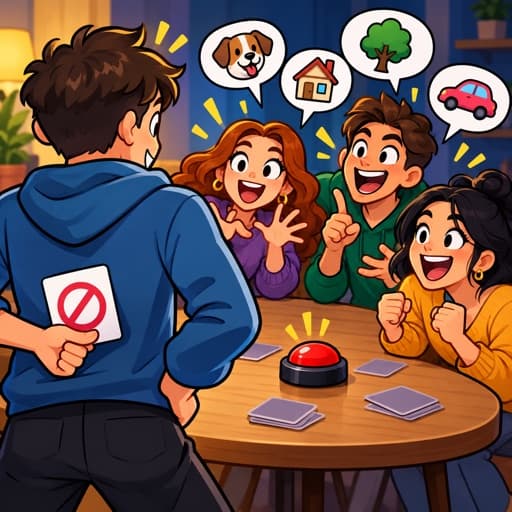
Taboo is louder and faster. Describe the word without saying the five words printed under it, against the clock, for your team. There is an office pack now: try describing "Deadline" without "due", "date", "late", "time" or "submit", in a room full of people who have missed one. The app catches a banned word typed in a clue; one said out loud is for the host's Buzz button.
Trivia plays in two, three or four teams. Everyone answers on their own phone and every point also counts for their team, and the host can put each question on the meeting room screen with Present to TV. The packs are general knowledge, Bollywood, cricket and Indian GK, all on by default, so one round covers the people who read the news and the people who read the scorecard.
If it is the whole floor, or the whole hour
Most party games stop at ten or twelve people in a room. Two here are built for a crowd. Tambola seats fifty in one room, calls the numbers on a timer, shows the board on the TV and checks every claim before anyone hears it, so nobody has to squint at a crumpled ticket. Latecomers join the draw already running with a fresh ticket. Meeting Bingo seats thirty, which covers most department calls.
For anything else, split the floor. Each pod of six to ten opens its own room of the same game, and you compare the winners at the end. It is quieter than one enormous game and nobody waits twenty minutes for a turn. There is a longer guide to running a game for twenty-five people that applies just as well to a sales team as to a family.
Meeting Bingo, honestly, is wasted on Fun Friday. It is buzzword bingo for a real meeting: everyone gets a card of things meetings always say ("you're on mute", "let's take this offline", "can you see my screen?") and taps a phrase when they hear it. Save it for the Monday status call. Nobody has ever wanted to leave that one early less.
A Fun Friday menu you can pin up
The table is the short version. Player counts and lengths come from the games themselves, so they are what you will actually see in the lobby.
| If you have | Play | Players | Typical length |
|---|---|---|---|
| 15 minutes, a team that half knows each other | Who Wrote It? (At Work pack) | 3 to 12 | 15–30 min |
| 15 minutes, everyone tired | Emoji Decode | 2 to 10 | 5–15 min |
| 30 minutes, a team of four to ten | Codenames | 4 to 10 | 15–30 min |
| 30 minutes, a loud room | Taboo (At the Office pack) | 3 to 10 | 10–20 min |
| 30 minutes and a TV | Trivia in teams | 2 to 10 | 10–20 min |
| An hour, the whole floor | Tambola | 3 to 50 | 15–30 min |
Making it a habit rather than an event
Keep the slot fixed and short. Fifteen minutes at four o'clock every Friday will outlive an hour at half past five that moves around. People plan their afternoon around a thing that happens; they plan their escape from a thing that might.
Rotate who hosts. Whoever creates the room is the host, and they can make someone a co-host who can run rounds and pause the game but cannot end it or change settings, which is the right amount of power for a colleague. The host can also line up the next game on Tonight's list, up to four in order, so the second game starts with one tap instead of a pause while someone scrolls.
Keep it safe by default, so nobody has to check. Every safe content pack is on from the start, and the 18+ packs stay off unless someone deliberately switches them on. Family mode filters language in everything anyone types, names included. If you do want Never Have I Ever with colleagues, there is a guide to the one specific way it goes wrong.
And stop while people are still enjoying it. The best Fun Friday ends with someone asking for one more round and being told "next week". There is a whole post on why game night dies at 9:40, and the office version of that is the five o'clock train. The full list of what works at work is on the games for the office page.
The games in this post
Who Wrote It?
Everyone answers a prompt about themselves. Guess which colleague wrote each answer.
- Call friendly
- High energy
Codenames
Spymasters give one-word clues for their secret agents.
- Call friendly
Taboo
Describe the word — but the obvious clues are banned.
- Call friendly
- High energy
Trivia
Race to answer questions across all topics.
- Call friendly
Tambola
Housie with auto-called numbers and instant claim checks.
- Call friendly
- High energy
Emoji Decode
Guess the movie, show or phrase from emoji clues.
- Quick
- Call friendly
More like these on Games for the Office.
Free tools for these games
Ready to try it?
Start a room in a few taps. No account, nothing to install.